
Following the agonising ecstasy that was our climb to the upper reaches of Gunlom Falls yesterday, we decided to take part in a somewhat more leisurely activity today. It was back into Kakadu that we ventured, but our destination this morning was the Cooinda Resort, from which the Yellow Water Billabong cruises depart. We were booked in for a 1½ hour boat cruise along the tranquil waters of the billabong.
It was the regular process this morning before leaving however, of tiring the dogs out, with a rapid paced walk around the grounds of the caravan park, before bidding them farewell, and heading on our way. It was an hour long drive to reach Cooinda, although we had timed it to leave us plenty of time to check in and pay for the cruise. We didn’t want a repeat of the other day, when we missed out on the other cruise we had wanted to take.
Our early arrival saw us sitting around twiddling our thumbs for nearly 45 minutes, before we boarded the bus that takes you to the pontoon mooring dock, where 4 large punts were tied up, awaiting us. Each one is capable of embarking 60 passengers, although the split the groups across two boats today, which made it less congested and gave us ample room to walk around to get the best vantage spot for pictures. As we pushed off from our mooring, our guide gave us a safety briefing that consisted of pointing out where the lifejackets were stowed, followed up with, “Ah, but if we sink, drowning’s the least of your worries in these waters!” as a wide smile spread across his face. The punts had a canvas cover, to keep the direct sun off of the passengers, but were otherwise open to the elements, so it was relatively cool out on the water, a fresh breeze blowing just hard enough to rustle the leaves in the trees, and cause the water grasses to bend with a rhythmic sway.
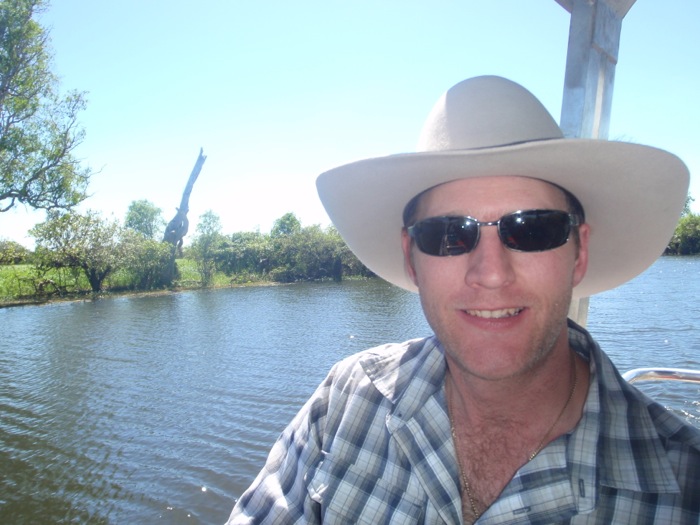
Enjoying the ride.
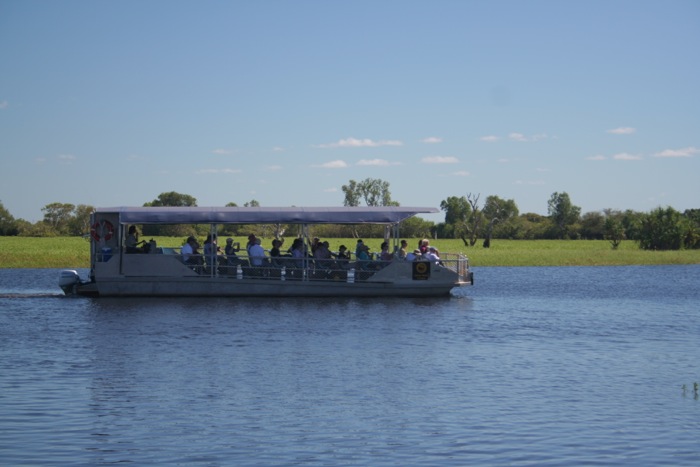
Just like that one, our boat was.
As we motored about the calm water of the billabong and into the South Alligator River, our guide pointed out countless different bird species. The highlight of the trip though, was reserved for the sighting of three crocodiles. It’s fun to see these beasts in captivity, but it’s another thing all together to see them in their natural habitat in the wild. Even peering at them from the safety of the boat gave you a sense of the power these giant lizards could unleash upon any unsuspecting wildlife or errant human prey.
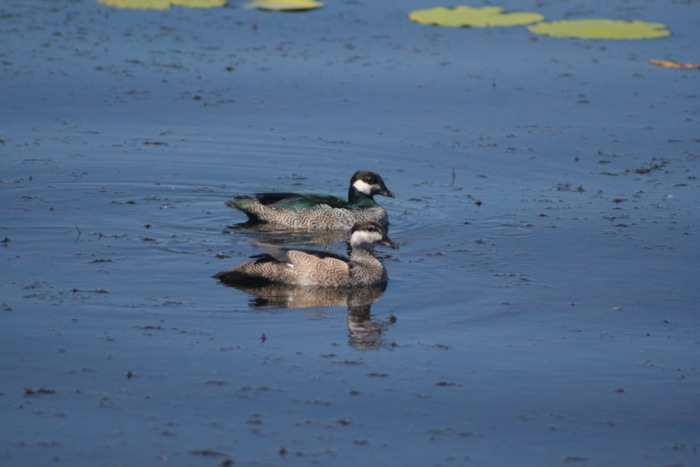
Some of the
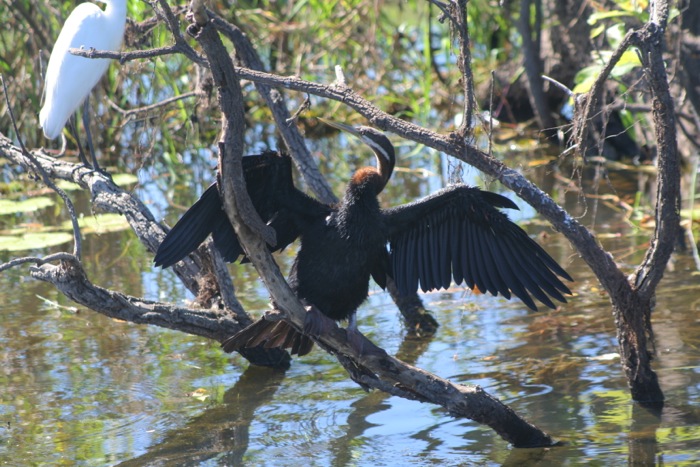
local
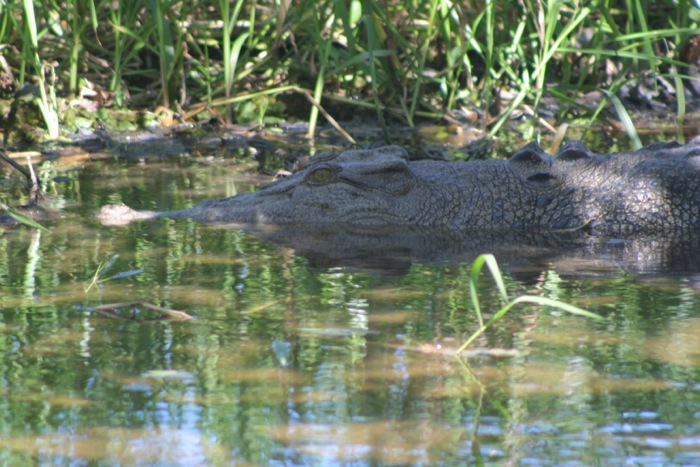
wild
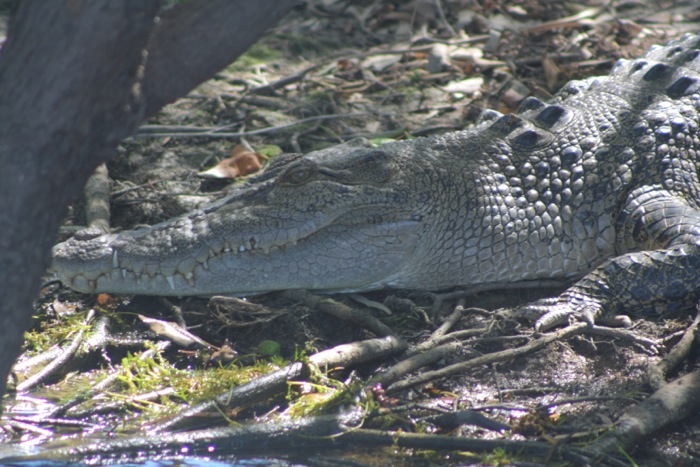
life.
We were bussed back to the resort at the conclusion of the cruise, where we were able to utilise the resort diner to get a bite to eat. We were on the verge of ordering two serves of potato wedges, until I saw the price. The prices were horrendously expensive, so in an effort to save a few dollars, we decided to share a single plate of wedges, for the princely sum of $12.50. We were shocked when the plate was brought to the table, piled high with crispy wedges. It was going to be a struggle (even for me) to get through this one plate, let alone the second plate, that we had been going to order. I guess it was just meant to be.
Well and truly satiated, almost to the point of being sick, we made our way back towards the main road, stopping along the way at the Aboriginal Cultural Centre. This is a fantastic place to learn about the ancient and ongoing culture of the local tribes from this area. It is well set up, and cost nothing to browse through.
I may just have even learned something. Looking at the rock art at Ubirr, I was thinking that the Australian Aboriginals must have been almost tribes of savages. They were certainly not an industrious race, evidenced by the fact we have no Coliseum or pyramids in Australia, but there culture is as complex and elaborate as you could imagine. They lived by a strict set of rules, and their intricate knowledge of their surroundings meant that they didn’t have to resort to industrialism to survive. We, as white fellas could stand to learn a lot from the way that Aborigines manage the bush. Their use of fire to prevent raging bushfires and encourage growth, and their methods of sustaining plant and animal life to prevent endangerment of food sources are just two examples. Yes, many indigenous people have been led astray since Australia was colonised, but this is generally as a result of outside influences. There are still tribes here, living a much more traditional way of life, that haven’t been as swayed by outsiders trying to make them something that they are not.
After 3 days of exploring the park, I can say with certainty that it is indeed worth the effort. I can see why locals might prefer Litchfield, for its compactness, but Kakadu endeavours to rewards those who take the time, and make the effort to explore it properly. It is not a park that can be appreciated without getting off of the beaten track.
Having done just that, and now learned a little about the traditional tribal way of life, it was time for the exhausting drive back to the caravan. The last week has pretty much seen us on the road each day, interspersed with periods strenuous activity, not to mention the energy sapping heat and it’s all beginning to catch up with us. We are both tired, and prone to snapping at each other over the silliest little things. I snapped at Bec the other night because she left the outside light on, and she snapped at me today because I backed ‘The Beast’ into one of the power outlet posts, putting a small dent in the tailgate. Honestly, if you didn’t know it was there, you probably wouldn’t see it, but I do know it’s there, so I do see it. Every damn time I look at the tailgate. All the electronic sensors and reversing cameras in the world are all useless if you’re too tired to properly pay attention to them. I wasn’t happy about it myself, but not much I can do about it now.
Thankfully, we have just tomorrow to go on the road, with a hopefully easygoing 300Km journey into Darwin. Then we can sit back and relax for a few weeks. That will be enough time hopefully, to recharge the batteries, before seeing us heading into the second half of the trip. So, bring on Darwin and the west coast.
Until next time, stay safe, have fun and don’t forget to write.

 Our Aussie Adventures